The neocloud business has been all the rage in 2026, and at one point, Nebius was up 220% YTD. At its core, it is a straightforward and easy-to-understand business model. A neocloud converts megawatts into recurring revenue on somebody else’s balance sheet, and the demand for those megawatts has been soaring due to the AI buildout. However, there are many intricacies to the business, and a lot of cogs that have to spin inside the wheel, making it anything but a straightforward and simple business.
Neoclouds’ soaring demand is the result of compute scarcity due to AI, but what the playing field looks like once first-term contracts are up could spell doom for the entire business model.
Company profile
Theme: Neocloud, Direction: Hold
Symbol: NBIS, Exchange: NASDAQ
Sector: Communication Services, Industry: Internet Content & Information
(legacy GICS classification)
Fair intrinsic value: $179.3 (-6%), as of August 02, 2026
Market capitalization: $58 831 million
Pricing data: P/S 67x, P/E 72x (inflated by revaluation gains)
TYPEFCAPITAL.COM
Consider following me on X and YouTube.
This article is for informational purposes only and does not constitute investment advice or an offer to buy or sell securities.
Business overview
Typically, my research reports contain a vast amount of financial data in order to understand core drivers of a business, its discipline, its strengths and weaknesses, its margin profiles, and the list goes on. However, with Nebius, there is not much to look at, at least not yet in terms of its current business.
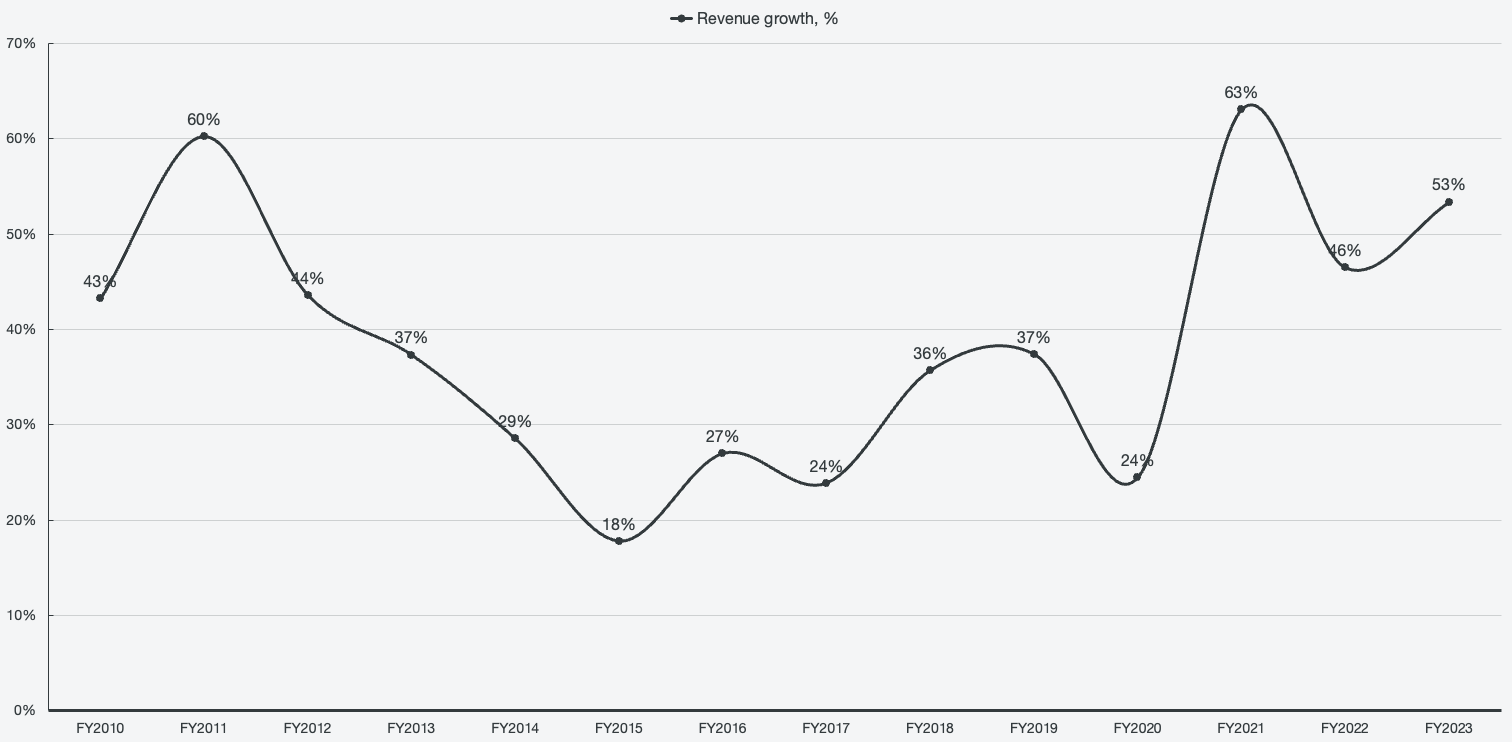
Nebius has historically been an engineering organization that built Yandex, a search, cloud, and self-driving platform at technical depth few firms outside of the US have matched, but by using a fraction of the budget of a giant like Google. It was highly successful, and the growth in the business was impressive, reaching a peak of ~$10 billion (800 billion RUB) in revenue in 2023.
Figure 1: Legacy business revenue growth
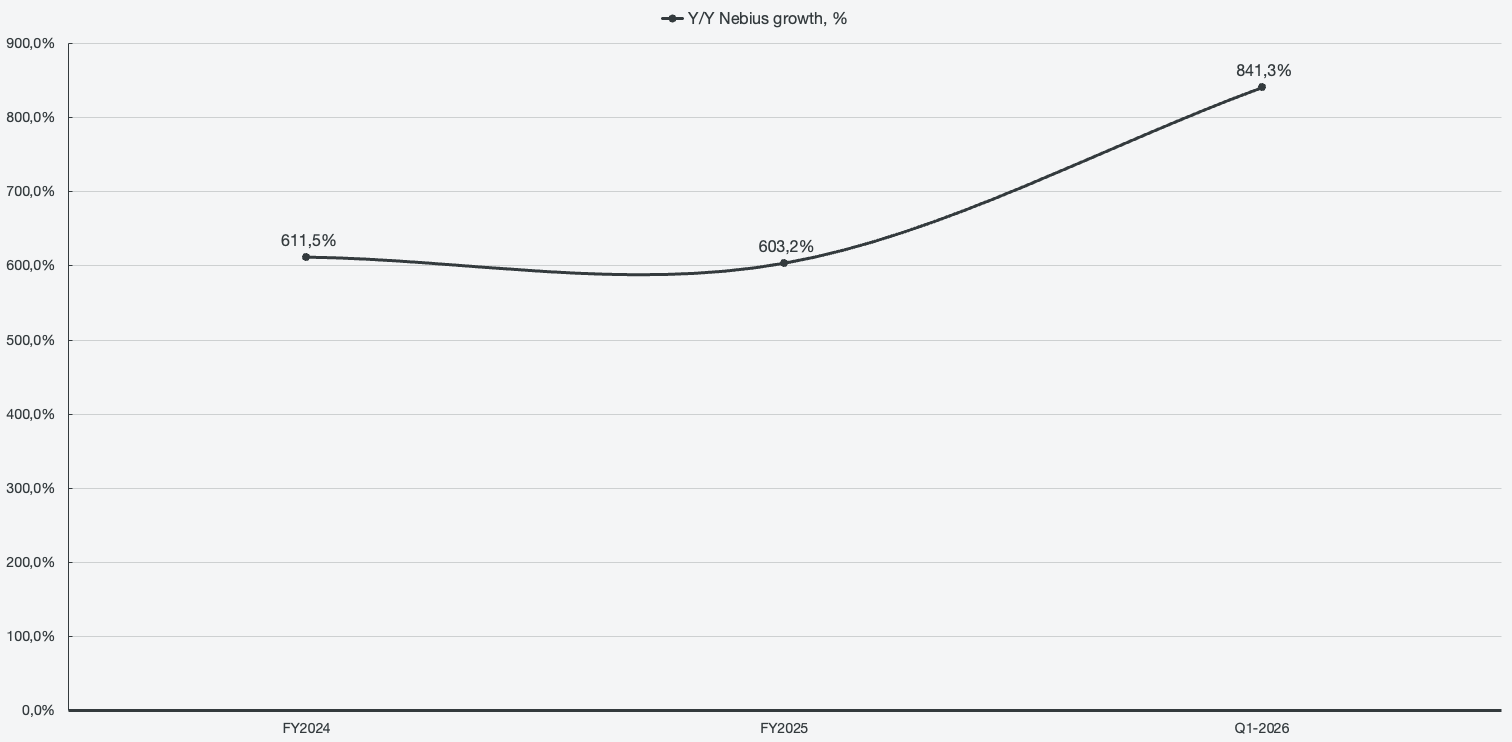
In 2024, the company carved out the Yandex part of the business and emerged on the Nasdaq without a legacy business and a pile of cash. The company retained its Finnish data center and the cloud infrastructure teams, along with Avride, Toloka, and TripleTen. Nebius then built the most vertically integrated of the neoclouds by owning both land and power, self-designing its data centers and racks, and building a hyperscale cloud platform with a software layer above it. From a near-zero base, revenue growth has been in a vertical growth phase as it rides the secular tailwind that is AI.
Figure 2: Segmented revenue
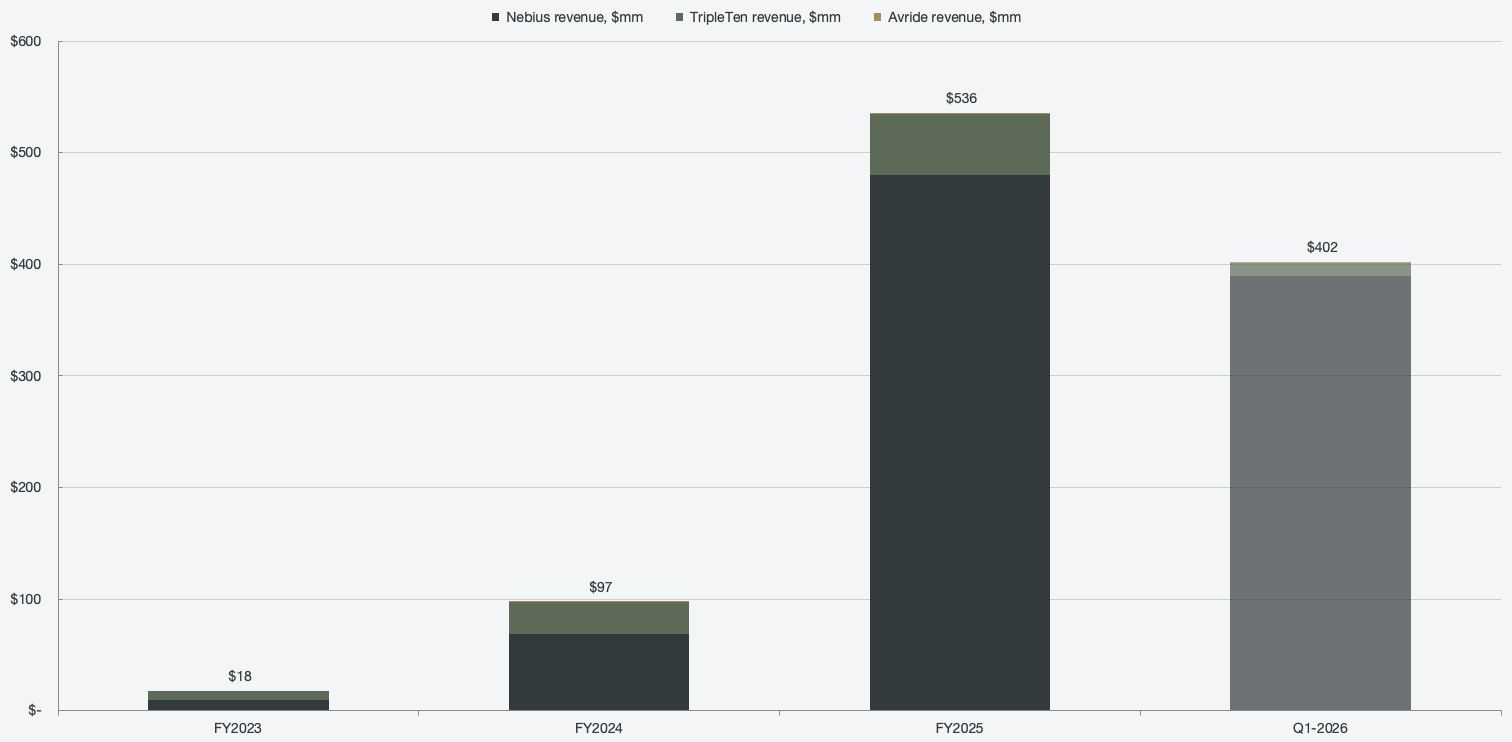
Before we get into the intricacies of the neocloud business, it is worth highlighting all the business segments. In essence, Nebius Group consolidates one dominant business and two consolidated subsidiaries. The AI cloud business accounts for 98% of total revenue as of Q1 2026, making the other two immaterial both in terms of size and opportunity.
The Avride stake comprises an autonomous vehicle tech company, focused on developing and operating self-driving delivery robots and robotaxis. It was originally part of Yandex’s self-driving division, and now partners with platforms like Uber to provide driverless food deliveries and robotic rideshare services. It more than doubled its AV-capable fleet YTD, and launched robodeliveries in Philadelphia. It passed 500k cumulative robot deliveries in early April, and has received strategic investments from Uber.
TripleTen is an education tech platform that provides bootcamp program in technology fields such as software engineering, data science, and cybersecurity. The segment grew 10% Y/Y, with about 5000 new students in Q1.
The way to approach TripleTen and Avride in relation to Nebius Group is as free optionality. Simply, focus on the AI cloud business when looking at the business, and whatever the equity stakes produce, you get for free.
It is also worth noting that Nebius has two deconsolidated equity stakes in ClickHouse (real-time analytics database) and Toloka (AI data for frontier labs). The stakes matter both as assets and also serve as a GAAP reporting distortion. Nebius reported positive net income in FY2025, but it is the result of a revaluation artifact rather than due to the companies’ operating results.
The neocloud business
While revenue growth has been impressive across the neocloud space, the true economics and the attractiveness of the business are quite obfuscated. A neocloud converts MW into recurring revenue, and when looking at the unit economics, it seems as if neocloud contracts merely return the approximated capital costs of the assets, and nothing else.
Figure 3: AI Cloud segment growth
Looking at CoreWeave’s CRWV 0.00%↑ contracted power, the backlog of $99.4 bn revenue against its >3.5 GW of power yields about $28mm per contracted MW, which is the lower end of what an MW costs to build. The first contract is the financing instrument that pays for the whole asset, and not where the actual money is. For the economics of neoclouds to make sense, the second contract has to land. However, at years ~5-8, the hardware is already substantially depreciated, just for when the contract renewals are coming up.
The renewal is uncertain
The question to be asking is: does the second contract exist, and at what price? The neocloud revenue largely exists on a few balance sheets, primarily concentrated at hyperscalers like Microsoft, Meta, and Google, as well as AI labs. However, while hyperscalers underwrite an overwhelming majority of neocloud demand right now, there’s a big question as to whether they will continue to do so since they are building out their own data center capacity.
┌────────────┬────────────────────────────────────────────────────┐
│ Buyer      │ Neocloud commitment                                │
├────────────┼────────────────────────────────────────────────────┤
│ Microsoft  │ ~$60B (CoreWeave, Nebius, Nscale)                  │
│ Meta       │ ~$62B ($21B CoreWeave, up to $27B Nebius)          │
│ Google     │ Lease guarantees (Cipher, TeraWulf)                │
│ OpenAI     │ Expanded by up to $6.5B in 2026 (CoreWeave)        │
│ Anthropic  │ Multi-year agreement (CoreWeave Q1 2026)           │
└────────────┴────────────────────────────────────────────────────┘
The four largest hyperscalers are guiding for roughly $700 billion in combined capital expenditures in 2026, all while simultaneously being the largest renters of third-party capacity. The reason for this is simply time, and not technology. It takes power and time to build out capacity. If a hyperscaler wants to build GW capacity in 2027, it must have secured its position to do so back in ~2023. For example, Microsoft has described in commentary that they can’t serve their full Azure backlog due to power constraints.
Renting out capacity at hyperscalers eases its construction pains, and as mentioned, they are throwing a lot of money at the problem. By the time the leases expire, will there be a second contract? The demand could be large enough to warrant another contract, but will the hardware still be up to par, and what price will it fetch? Neoclouds will need to continuously build out capacity, and at a projected lower $ per MW.
The reason is spelled inference, and is a double-edged sword. Inference is a reliable source of recurring workload and has a higher margin profile compared to training. Inference accounted for roughly a third of AI compute in 2023, which became about half by 2025, and now in 2026, it accounts for two-thirds (per Deloitte). However, cost per unit of inference is quickly collapsing.
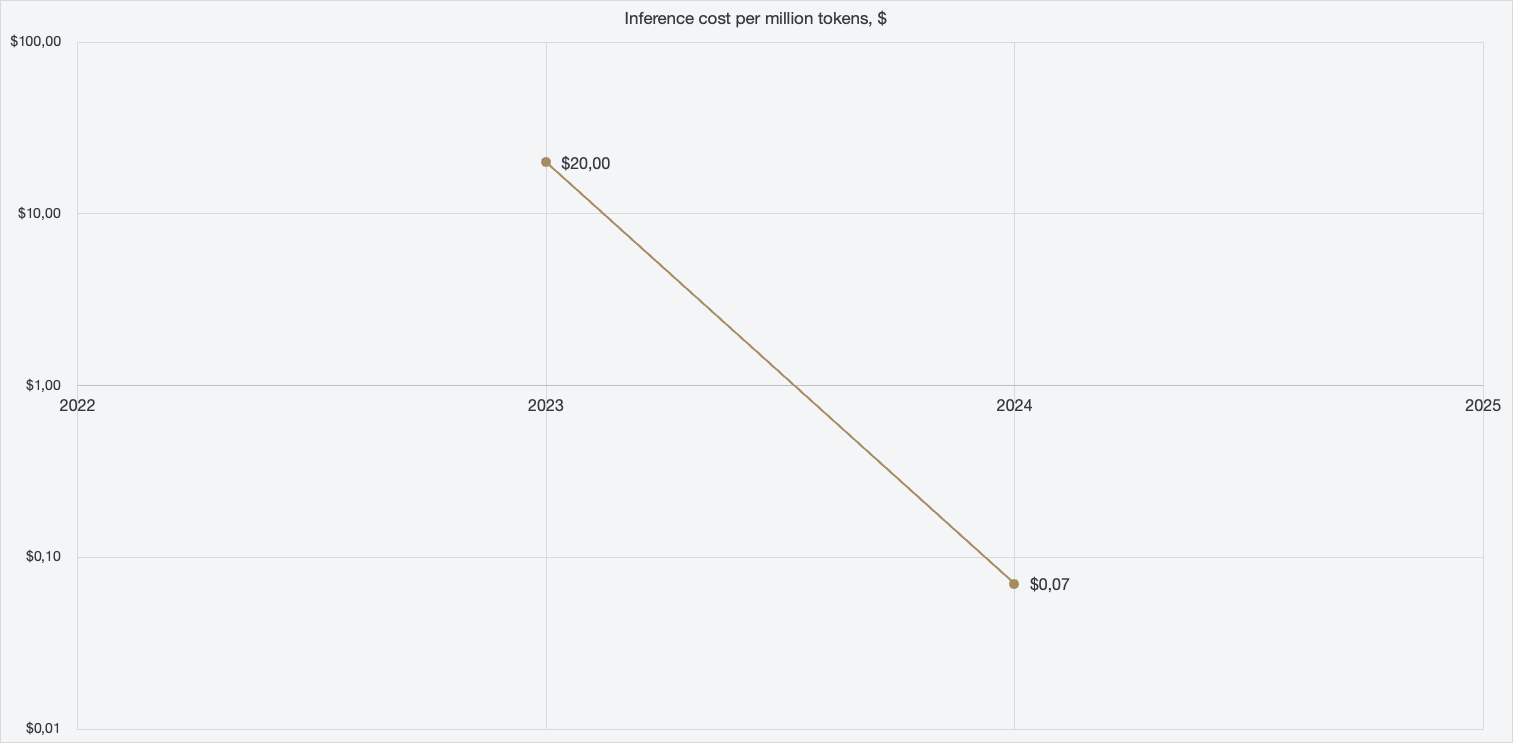
Per the Stanford AI Index 2025, the cost of inferencing a GPT 3.5-equivalent model has fallen from ~$20 per million tokens in late 2022 to $0.07 in 2024, a 280-fold reduction. Inference is the reason the overall market keeps growing, but for neoclouds, it is also the reason why revenue per MW will keep falling.
Figure 4: GPT 3.5-equivalent inference cost
Recent developments see Meta building its own cloud business to sell compute, while simultaneously being the sector’s second-largest customer with roughly $62 billion in committed capital across CoreWeave and Nebius. That adds a lot of fuel to the fire that is renewal risk.
Nvidia has begun underwriting GPU residual values under a new six-year backstop. Nvidia will rent back unused GPUs at a pre-agreed price in exchange for a share of cloud revenue. It removes the capital constraint that has been rationing supply in the sector, making it good for volume, but bad for pricing and the revenue/MW which neoclouds depend on for their economics.
Nebius cloud
The Nebius stack is built in several layers, but before we dive deep into Nebius neocloud, it is important to distinguish between the different kinds of neoclouds that exist. Operators, which are the category that Nebius and CoreWeave fall into, sell compute and carry risks in terms of GPUs becoming obsolete, utilization, and price risk. Landlords, which are companies like Applied Digital, Cipher, TeraWulf, etc., lease powered shells for up to 25 years at a much lower rate. They lease them to investment-grade or investment-grade guaranteed tenants, and transfer the demand risk in exchange for a fraction of the revenue accrued.
Generally, there is roughly 4-6 times less revenue per MW that landlords collect compared to operators, but that is simply the price of risk transfer. Landlords contractually shed demand, utilization, and obsolescence risk. There is also a third category, the aggregators, which contract capacity from landlords and resell it, carrying even less risk.
Published estimates of the price per AI megawatt vary depending on what is included.
Conventional data-center shell and core
$10-12 million per MW
AI-optimized shell (liquid-cooled, high-density)
$15-20 million per MW (higher power density, liquid cooling loops, heavier electrical work)
Tenant-adapted shell with GPUs and networking
~$20-25 million per MW (GPUs alone exceed $20mm/MW)
All-inclusive operational AI megawatt
~$28-38 million per MW
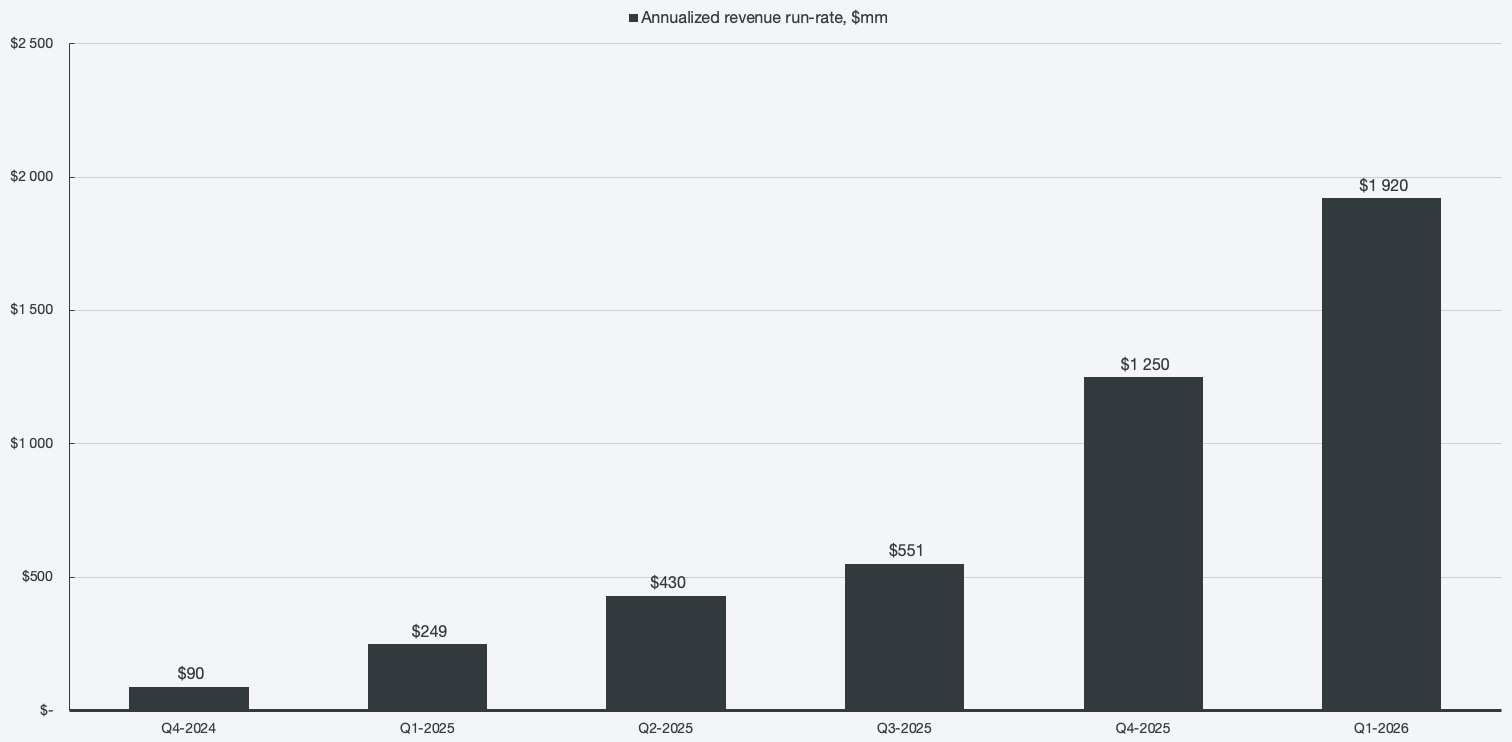
Operator revenue run rates are roughly $8-12 million per MW at current pricing (CoreWeave $8.3bn annualized against >1 GW, Nebius $1.92bn ARR against ~200 MW active power), which is also expected to drop over time. With that in mind, gross revenue payback becomes >3 years, and that is before any dollars of operating cost. Once power, hosting, staff, SG&A get layered in, it’s more looking like ~5 years until payback. The weighted-average contract per CoreWeave’s disclosures is about 4 years, which means the contract approximately repays the asset, and that’s at current rates.
Nebius monetizes its physical assets in a variety of ways, each with a different margin profile.
AI factories, including land, power, and DCs
Monetizes capacity. Is capital-intensive, but has a cost advantage layer since Nebius has in-house DC design.
Reserved GPU capacity
Monetizes hyperscalers and AI labs through visibility and prepayments. Generally priced below spot, but finances the overall build.
On-demand and short-term AI cloud (Aether)
Monetizes startups and enterprises across a variety of verticals. Has a higher rate per GPU-hour, but still retains utilization risk.
Token Factory (managed inference)
Serving custom and open-source models on a per-token basis (Revolut, monday.com, etc). Has the same margin characteristics as a software business, and sits on top of the same GPUs. Becomes strategic for post-scarcity pricing power.
Agentic and software layers
Monetizes search and inference optimization.
Other stakes and businesses
Avride (AV/Robotics), TripleTen (edtech), ClickHouse, and Toloka stakes. Serve as optionality and are largely immaterial to revenue, but material to asset value.
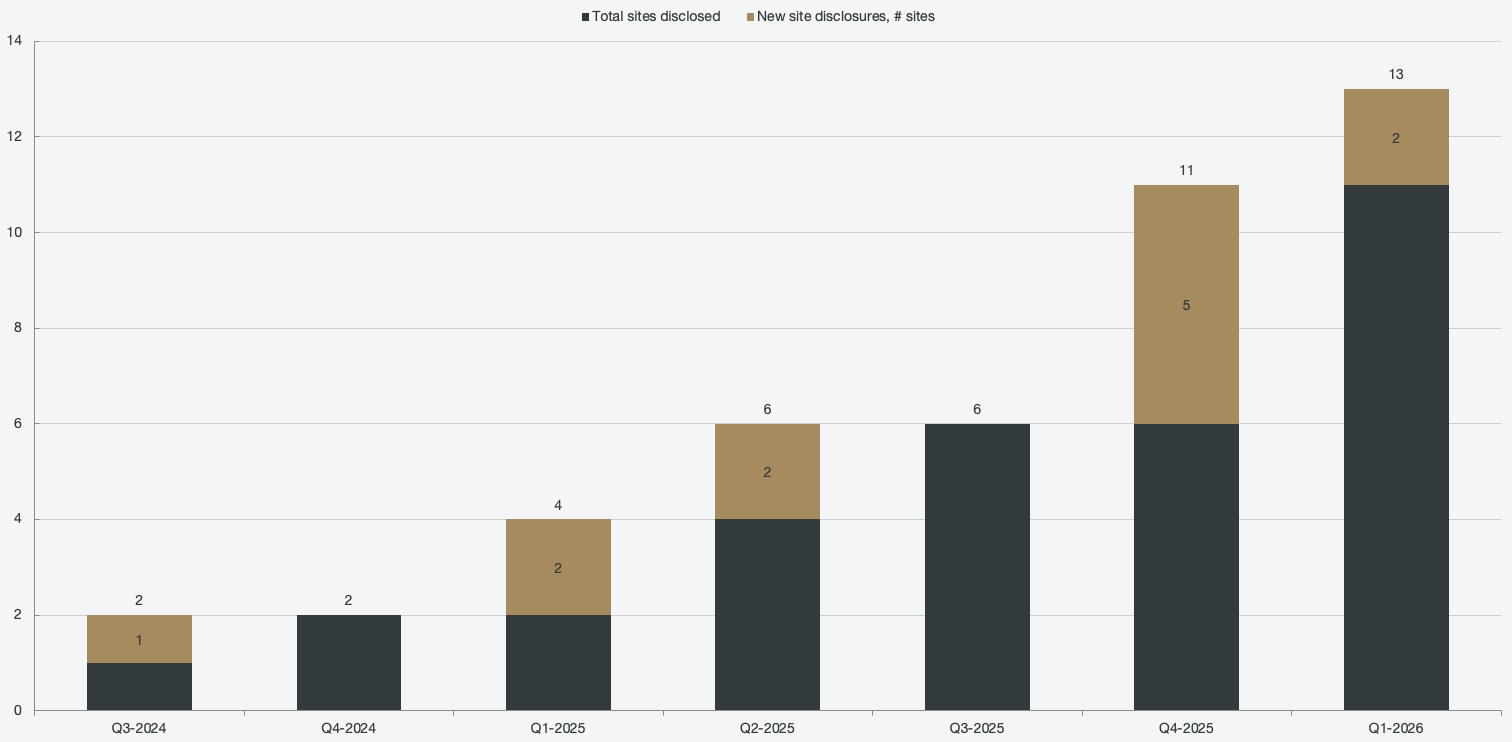
Nebius has been aggressive in adding new locations and increasing the capacity potential globally. As of Q1 2026, there are 13 disclosed sites, with guidance of 16 total sites by the end of 2026. As of 2025, sites are operational in Finland, Kansas City, Vineland, Iceland, the UK, and Israel, with 2 under construction and the rest just being announced.
Figure 5: Site disclosures
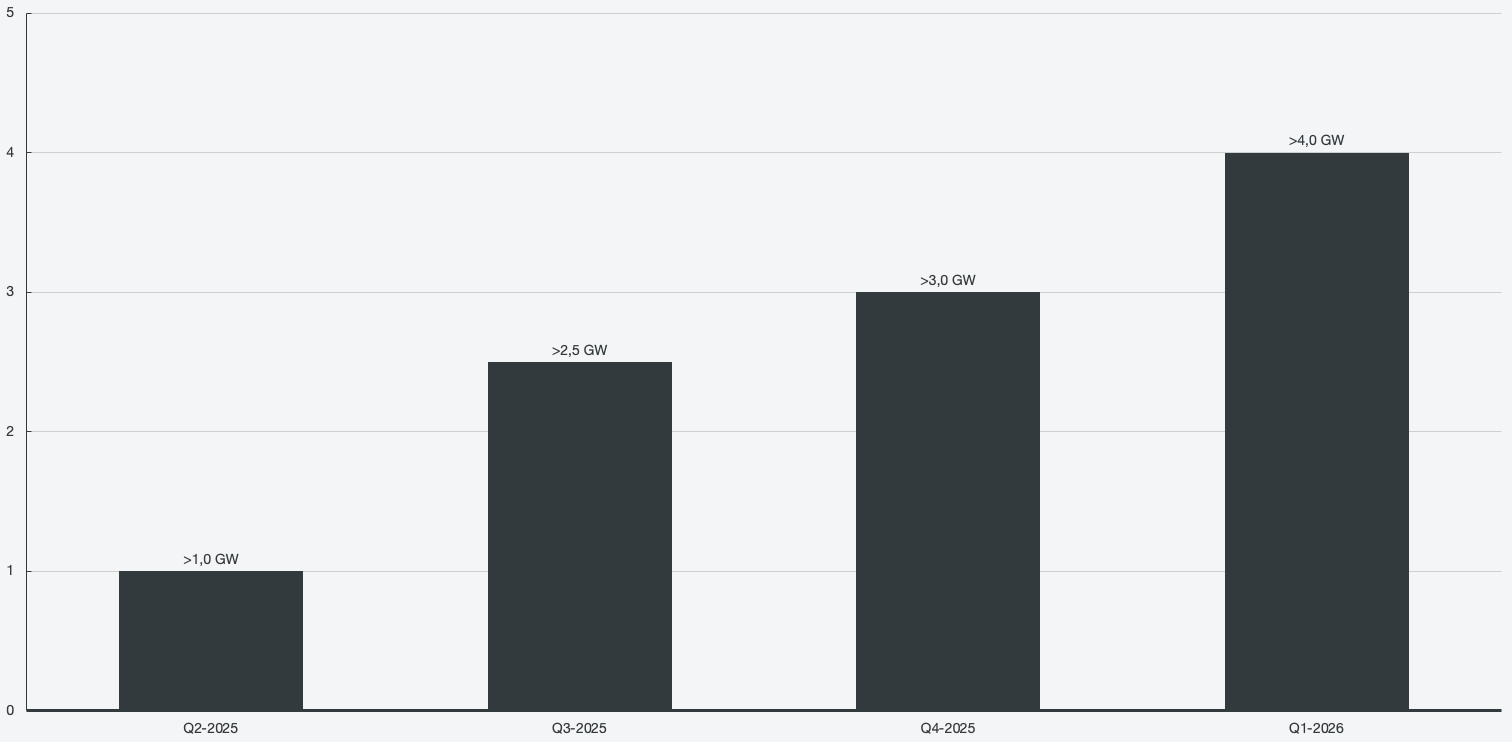
A major expansion is needed in order to acquire credibility for future contracts. As of Q1 2026, contracted power is guided to be >4 GW by year-end. Of that, ~1 GW is expected to be connected power, a guide that has strangely stayed unchanged since 2025 while contracted power quadrupled.
Figure 6: Contracted power guidance, end-of-period 2026
While there are limited KPIs and financial data to observe in Nebius current state, there are a lot of metrics to track over time to ensure a proper monitoring framework for the sector.
Contracted power, connected power, and active power conversion
Connected power hits guidance targets and active power tracks it within one or two quarters.
Backlog conversion rate
These should be growing together to indicate a healthy reading.
Revenue per active MW
Given the capital-intensive nature of the business, $mm/MW will be an early indicator of sustainability.
Hyperscaler CapEx revisions
If capital expenditure continues to be revised up at hyperscalers, it signals an increase in demand. Once it starts getting cut, it indicates a sector-wide top signal.
Nebius ARR is defined as last-month AI-cloud revenue multiplied by 12, making it a run-rate snapshot and not contracted forward revenue. This is the prime metric for capturing the momentum of the business, but it won’t tell us about duration or churn, and will stay ahead of trailing revenue while the business ramps.
Figure 7: ARR